

Infusion billing for physician practices and ambulatory infusion centers: biologics, immune globulin, iron, hydration and injections, with administration coded from documented start and stop times, drugs billed by the unit, and authorizations and site-of-care rules handled before the first dose.


Infusion billing is two claims in one: the drug and the time it took to give it. The administration is coded from the start and stop times in the record, each drug is billed in its HCPCS unit with its waste reported, authorizations are approved before the patient sits down, and any denial is worked until it is paid.
$330M
in improper Medicare payments for Part B drugs other than chemotherapy in CMS’s 2025 review
80.0%
of those drug errors were missing or insufficient documentation
An infusion visit can involve several drugs, a hydration line and a push, and only one of them is the initial service. Each later one is billed as sequential, concurrent or an additional hour, and each depends on the minutes in the record. The drugs themselves cost far more than the administration, so a wrong unit count or missing authorization can turn one visit into a large write-off.
The times and the units decide the claim. That is why we rebuild every infusion visit from the documented times and doses before the claim goes out.
Every infusion claim has an administration part, a drug part and a coverage part. Each one can be wrong on its own. Here is what goes wrong in each, and what we do.
Pays forInfusions, pushes, injections and hydration, coded by the order and length of each one.
Where it breaks
What we do
Pays forBiologics, immune globulin, iron and other drugs, billed in their HCPCS unit sizes.
Where it breaks
What we do
Pays forAuthorizations, reauthorizations and the plan’s rules on where an infusion may be given.
Where it breaks
What we do
A therapeutic infusion is billed with 96365 for the first hour and 96366 for each additional hour, which is billed only when the infusion runs more than 30 minutes past the previous hour. An infusion of 15 minutes or less is reported as an IV push (96374). Hydration follows the same pattern with 96360 and 96361, but needs more than 30 minutes to be billed at all.
Only one initial service is billed per encounter. In a physician office it is the service that is the main reason for the visit. Each new drug after it is a sequential infusion (96367) or push (96375), and a drug infused at the same time as another is billed once as concurrent (96368). The record needs the start and stop time of each line for any of this to hold.
What we do: we lay out each visit’s lines in order from the documented times, pick the initial service, code the rest as sequential, concurrent or additional hours, and check each against its time threshold before the claim goes out.
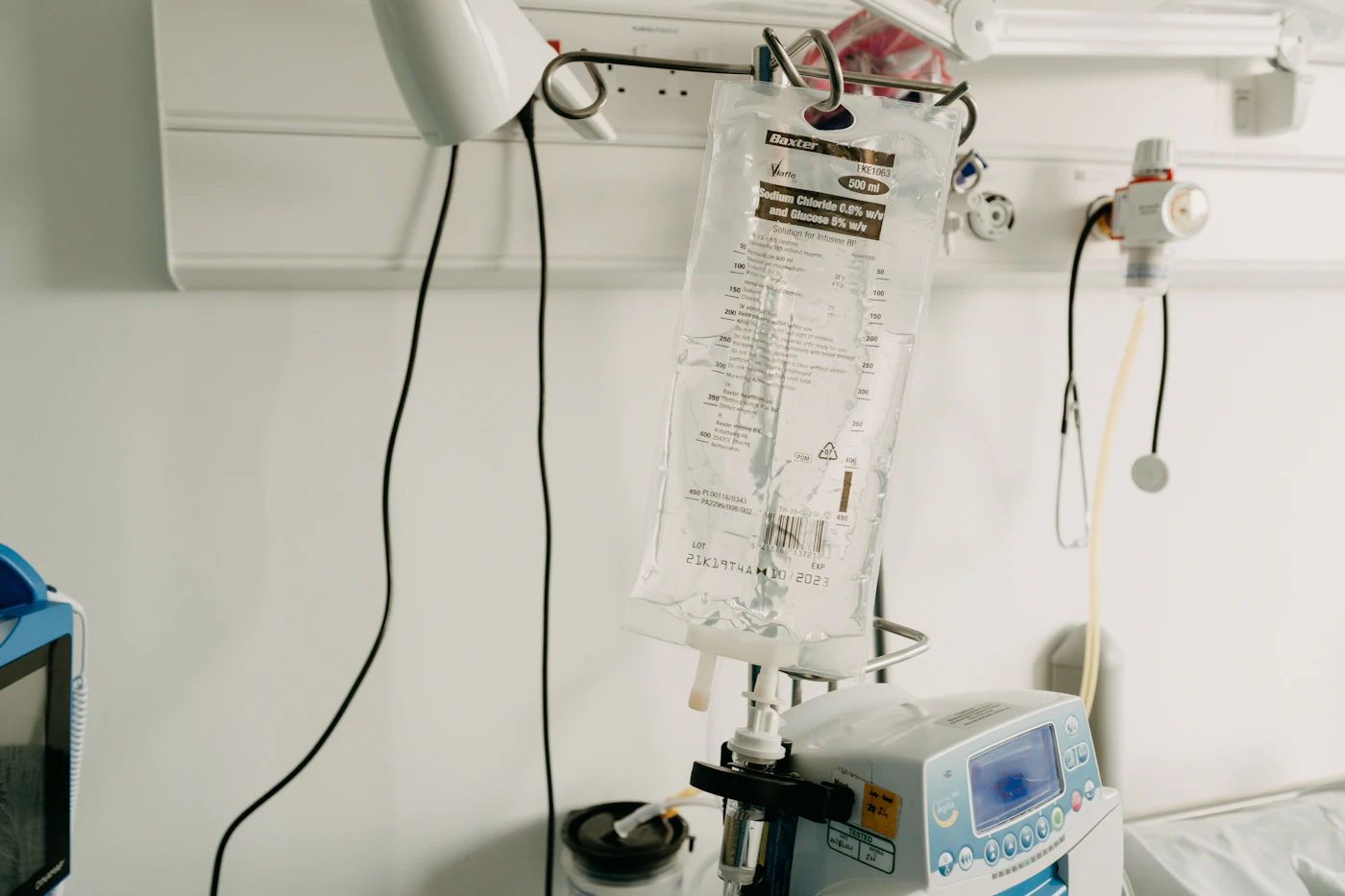
An infusion claim pairs time-based administration codes with drug codes in fixed units. These are the codes we see most, with what payers check on each.
| Code | What it covers | What payers look for |
|---|---|---|
| 9636596366 | Therapeutic infusion, first hour and each additional hour | More than 15 minutes for 96365; more than 30 minutes past the hour for 96366. |
| 9636796368 | Sequential and concurrent infusion | A new drug after the initial service; concurrent billed once per encounter. |
| 9636096361 | Hydration, first hour and each additional hour | More than 30 minutes, and a documented reason for the fluids. |
| 9637496375 | IV push, initial and each sequential new drug | 15 minutes or less, or a push by definition. |
| 96372 | Subcutaneous or intramuscular injection | Not billed with an infusion of the same drug. |
| J1569 | Immune globulin (Gammagard Liquid), per 500 mg | Units from the dose, and the diagnosis the plan covers. |
| J2350J2323J3380 | Ocrelizumab, natalizumab and vedolizumab, per 1 mg | Authorization, units from the dose, and JZ or JW. |
| J1745 | Infliximab, per 10 mg | The plan's preferred product and units from the weight-based dose. |
Required by Medicare on single-dose drugs when the whole dose was given.
The unused part of a single-dose vial, billed on its own line.
A second initial service when a separate access site was medically needed. Our modifier 59 guide
Medicare: a drug expected to be denied, with no signed notice.
Medicare: a drug or service that may not be covered, with a signed notice.
Sources: Medicare Claims Processing Manual, chapter 12, section 30.5, and chapter 17 (drugs and biologicals); CMS JW and JZ Modifier FAQs. CPT is a registered trademark of the American Medical Association; the descriptions above are summaries. Reviewed October 2026.
It is not for every practice. If you are a hospital-employed group whose billing the hospital handles, you do not need us. And if your in-house team keeps denials low and receivables current, keep them, and consider a periodic billing audit instead.
We look at your clean-claim rate, your denials by payer and reason, administration coding from documented times, drug units and waste, authorizations, and your aging receivables, and tell you what we find, whether or not you go further with us.
We get access to your practice management system and clearinghouse, load each payer's authorization and bundling rules and your fee schedules, list active infusion patients, their drugs and authorizations, and agree how escalations work. Most practices are live within one to two weeks.
Infusions, pushes and drugs are coded and claims submitted within 24 hours. Rejections are corrected the same day, remittances posted as they arrive, times, units and authorizations checked, and denials worked to their cause, all inside your system.
A report you can read in ten minutes: what was billed and collected by payer, site and service line, what was denied and why, authorizations pending, and what is aging.
You do not change systems to work with Summit Billing Solutions. We work in the practice management and EHR systems below, and through the clearinghouse you already use. If your EHR is not shown, ask; the list grows as we onboard practices.


Before an infusion claim goes out, we order each line by its documented times, pick the initial service, and convert every dose into units with its waste reported.
You know who is working your account, and you hear from them every week. A familiar face, not a ticket queue.
If we are not earning the relationship, you can leave. That keeps us honest.
Summit is a US company based in Salem, New Hampshire, billing for practices nationwide with the state-by-state payer and Medicaid knowledge that takes.
95-98%
First-pass claim rate
24 hrs
Claims submitted within
28
Average days in A/R
Drug charges make infusion claims some of the largest a practice sends, so accuracy on each one matters more than volume. A fee that is a share of collections ties our pay to getting those claims paid as billed.
Summit Billing Solutions charges between 3% and 9% of monthly collections. Your rate depends on infusion volume, the drugs you buy and bill, how many need authorization, and the state of the receivables, which we see in the free account review.
3% to 9%
of monthly collections
We bill for more than 40 specialties, for practices in all 50 states, from Salem, New Hampshire. Each one has its own codes, modifiers and payer rules.
A free account review looks at your clean-claim rate, your denials by payer and reason, administration coding from documented times, drug units and waste, and authorizations, and your aging receivables, and tells you what we would change. No cost, no obligation, and no pressure to continue. What the review covers, step by step, is on the free account review page.
50A Northwestern Dr Ste 3, Salem, NH 03079-4827
603-207-3172
(866) 906-3116
info@summitbillingsolutions.com
Mon - Fri @ 9am - 5pm


