

Gastroenterology billing for practices and groups: screening colonoscopies that turn diagnostic, EGDs and biopsies, anesthesia and sedation, office visits, and infused biologics for IBD, worked inside the software you already use.


Gastroenterology billing services turn every visit, endoscopy and infusion into a paid claim. Each procedure is coded to what was found and what was done, screening rules are applied by payer before the claim goes out, anesthesia is matched to the procedure, and every payment, denial and patient balance is followed until it is resolved.
$178M
in improper Medicare payments to gastroenterology in CMS’s 2025 review, a 14.6% improper payment rate
91.2%
of those gastroenterology errors were missing or insufficient documentation, and another 8.6% were incorrect coding
Gastroenterology claims change on the table. A colonoscopy booked as a screening becomes a therapeutic procedure the moment a polyp is removed or a biopsy is taken, and the codes, the modifiers and what the patient owes all change with it, one way for Medicare and another for commercial plans. Add anesthesia and sedation billed on separate claims, more than one scope in a session, and biologic infusions that need authorization, and one patient’s procedure day can produce several claims that all have to agree.
What happened during the procedure decides the claim. That is why we check the reason for the scope, the findings and the payer’s screening rules on every endoscopy claim before it goes out, not after the patient calls about a bill.
Most GI practices bill endoscopies, office visits and infusions in the same week, often for the same patient.
Pays forColonoscopies and other colorectal cancer screening, covered without a deductible when they are coded as screening, by Medicare and by most commercial plans.
Where it breaks
What we do
Pays forDiagnostic and therapeutic EGDs, colonoscopies and other scopes, plus the anesthesia or moderate sedation that supports them.
Where it breaks
What we do
Pays forConsultations and follow-up visits, plus infused biologics for IBD billed with the drug, the dose and the administration.
Where it breaks
What we do
A colonoscopy is billed as a screening when the patient has no symptoms and is due for one. If the physician removes a polyp or takes a biopsy, it becomes a therapeutic procedure, and the claim changes. For Medicare, the procedure performed is billed with modifier PT: the deductible is still waived, but the patient owes coinsurance, which is 15% through 2026, 10% from 2027 to 2029 and nothing from 2030. Plans covered by the Affordable Care Act use modifier 33, and the polyp removal stays part of the screening, with no cost sharing.
The colonoscopy that follows a positive stool test, such as a FIT or a stool DNA test, is a screening too. Medicare covers it as one when the claim carries modifier KX, and plans under the Affordable Care Act must cover it without cost sharing.
What we do: before an endoscopy claim goes out, we check why the procedure was scheduled, what was found and done, the patient’s risk status and the payer. If the codes, modifiers or diagnosis order do not match, we fix them the same day, so a patient is not billed for a screening that should have been covered.
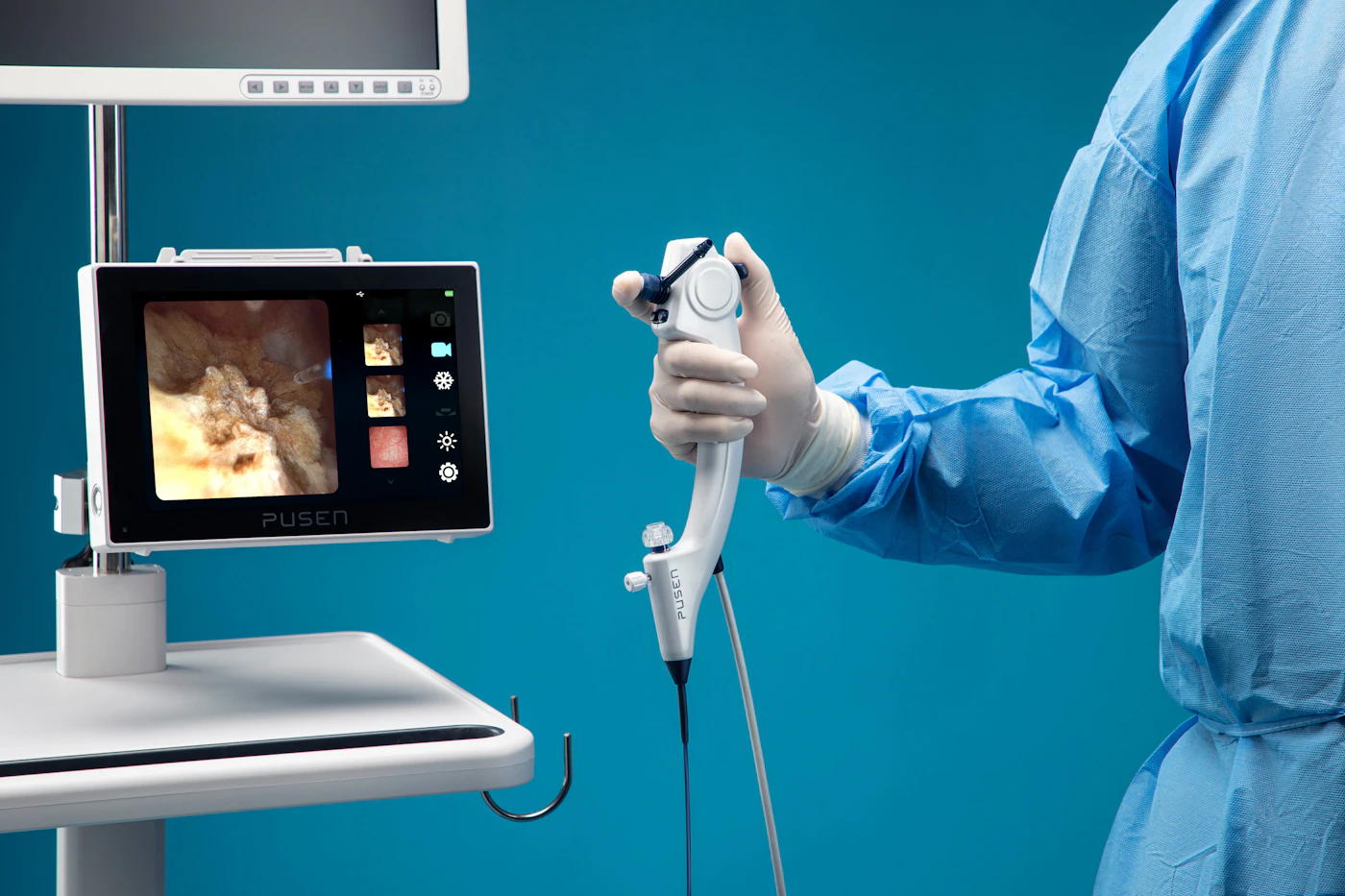
GI claims turn on how each endoscopy is coded: screening or diagnostic, what was found and what was removed. The codes below cover most of that work, with what payers look for. Commercial plans add their own authorization and bundling rules, and we check each one.
| Code | What it covers | What payers look for |
|---|---|---|
| 99202 to 99215 | Office visits (E/M) | The level matches the decision making or time documented; modifier 25 with a same-day procedure only when the visit is separate. |
| G0121G0105 | Medicare screening colonoscopy, average and high risk | Every 10 years for average risk and every 24 months for high risk; no deductible or coinsurance when nothing is removed. |
| 45378 | Diagnostic colonoscopy | The base code; not billed with a therapeutic colonoscopy code from the same session. |
| 45380 | Colonoscopy with biopsy | One unit however many biopsies are taken; 59 or XS only with a removal from a different lesion. |
| 45385 | Colonoscopy with snare removal of polyps | Billed once for all polyps removed by snare; PT or 33 when the colonoscopy started as a screening. |
| 43235 | Diagnostic EGD | The base code for upper endoscopy; replaced by the therapeutic code when one is performed. |
| 43239 | EGD with biopsy | One unit for any number of biopsies, with the indication documented. |
| 008110081200813 | Anesthesia for lower, screening and combined upper and lower endoscopy | 00812 only while the colonoscopy is a screening; 00811 with PT once it becomes diagnostic. |
| 9915299153G0500 | Moderate sedation by the endoscopist | G0500 replaces 99152 for a screening colonoscopy, and G0500 or 99153 carries modifier 33. |
| 91110 | Capsule endoscopy, esophagus through ileum | Prior authorization from many plans, with the clinical reason documented. |
| J-codeinfusion code | Infused biologics for IBD | Authorization, units from the dose given, the NDC, JZ or JW on single-dose vials, and the administration code the plan accepts for that drug. |
Medicare: a screening colonoscopy where a polyp was removed or a biopsy taken. The deductible is still waived.
Commercial plans: tells the plan the procedure is a screening, so no cost sharing applies, polyp removal included.
Medicare: the colonoscopy after a positive FIT or stool DNA test, billed as a screening.
A biopsy and a removal from different lesions in the same session. Our modifier 59 guide
An office visit that is significant and separate from a same-day procedure. Modifier 25 explained
A colonoscopy stopped before it was complete, for example because the bowel prep was inadequate, so the payer knows why.
Sources: CMS MLN Matters MM12656 and MM13017; Medicare Claims Processing Manual, chapter 18 (preventive services) and chapter 12 (physician services); Medicare NCCI Policy Manual, chapter VI (digestive system). CPT is a registered trademark of the American Medical Association; the descriptions above are summaries. Reviewed October 2026.
It is not for every practice. If you are a hospital-employed group whose billing the hospital handles, you do not need us. And if your in-house team keeps denials low and receivables current, keep them, and consider a periodic billing audit instead.
We look at your clean-claim rate, your denials by payer and reason, screening claims and their modifiers, anesthesia and sedation, authorizations, and your aging receivables, and tell you what we find, whether or not you go further with us.
We get access to your practice management system and clearinghouse, load each payer's authorization and bundling rules and your fee schedules, list open authorizations and scheduled infusions, and agree how escalations work. Most practices are live within one to two weeks.
Visits, endoscopies and infusions are coded and claims submitted within 24 hours. Rejections are corrected the same day, remittances posted as they arrive, screening modifiers and anesthesia checked against each procedure, and denials worked to their cause, all inside your system.
A report you can read in ten minutes: what was billed and collected by payer, site and service line, what was denied and why, authorizations pending, and what is aging.
You do not change systems to work with Summit Billing Solutions. We work in the practice management and EHR systems below, and through the clearinghouse you already use. If your EHR is not shown, ask; the list grows as we onboard practices.


Before a GI claim goes out, we check screening or diagnostic status, what was found and removed, bundling between procedures, and the anesthesia and infusion authorizations.
You know who is working your account, and you hear from them every week. A familiar face, not a ticket queue.
If we are not earning the relationship, you can leave. That keeps us honest.
Summit is a US company based in Salem, New Hampshire, billing for practices nationwide with the state-by-state payer and Medicaid knowledge that takes.
95-98%
First-pass claim rate
24 hrs
Claims submitted within
28
Average days in A/R
A gastroenterology practice bills procedures, office visits and often infusions, and endoscopy coding decides most of the revenue. Most billing companies take a percentage of collections; a few charge flat monthly or per-claim fees. A percentage keeps the focus on getting each procedure paid as coded.
Summit Billing Solutions charges between 3% and 9% of monthly collections. What moves the number for a gastroenterology practice is the mix of endoscopy, office and infusion work, procedure volume, authorization volume, and how clean the receivables are when we take them on, which is why we quote your exact rate after the free account review, not before.
3% to 9%
of monthly collections
We bill for more than 40 specialties, for practices in all 50 states, from Salem, New Hampshire. Each one has its own codes, modifiers and payer rules.
A free account review looks at your clean-claim rate, your denials by payer and reason, screening claims and modifiers, anesthesia and authorizations, and your aging receivables, and tells you what we would change. No cost, no obligation, and no pressure to continue. What the review covers, step by step, is on the free account review page.
50A Northwestern Dr Ste 3, Salem, NH 03079-4827
603-207-3172
(866) 906-3116
info@summitbillingsolutions.com
Mon - Fri @ 9am - 5pm


