Podiatry billing for practices and groups: routine foot care for at-risk patients, nail and wound care, foot and ankle surgery, and diabetic shoes and inserts, worked inside the software you already use.

Podiatry billing services turn every visit, procedure and device into a paid claim. Each service is coded to the toe, side and findings documented, Medicare’s foot care rules are applied before the claim goes out, and every payment, denial and patient balance is followed until it is resolved.
$148M
in improper Medicare payments to podiatry in CMS’s 2025 review, a 5.1% improper payment rate, mostly from missing or insufficient documentation
54.3%
improper payment rate on medical equipment and supplies billed by podiatrists, such as diabetic shoes and inserts, in the same review
Medicare does not pay for routine foot care unless the patient’s condition makes it risky to go without it. Trimming nails, paring corns and calluses and debriding nails are covered only for patients with a qualifying systemic condition, documented with specific findings and a modifier that says which ones. Add procedures coded by the toe they were done on, foot surgery with 90-day global periods, and diabetic shoes that need a certifying physician’s statement, and most podiatry denials come from what the note left out.
The findings in the note decide the claim. That is why we check the diagnosis, the class findings, the toe and the frequency on every foot care claim before it goes out, not after it is denied.
Most podiatry practices bill at-risk foot care, office procedures and surgery or equipment in the same week, often for the same patient.
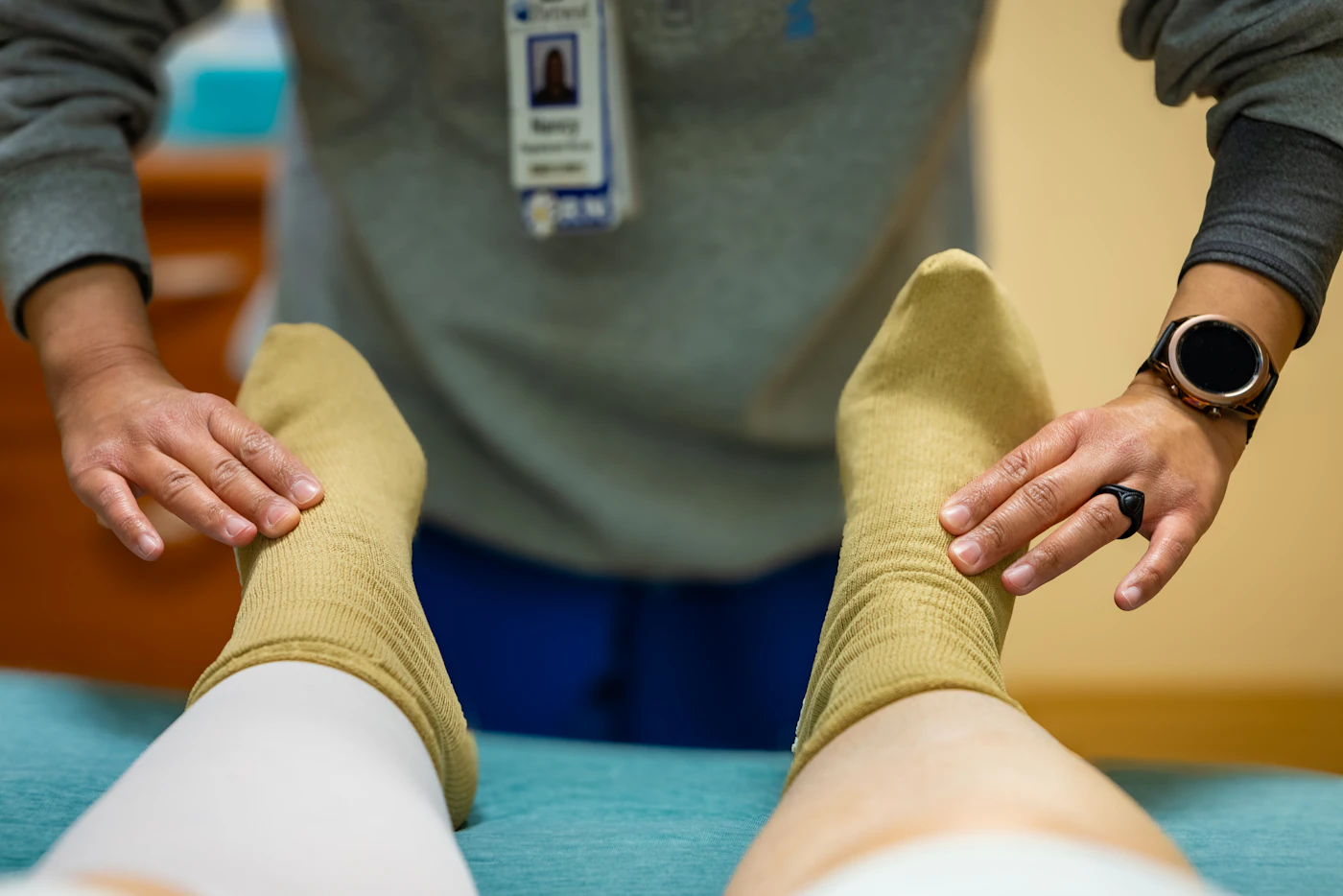
Pays forNail trimming and debridement, and paring of corns and calluses, for patients with diabetes, vascular disease or another qualifying condition.
Where it breaks
What we do
Pays forWound debridement, ingrown and permanent nail procedures, injections and other procedures done in your office.
Where it breaks
What we do
Pays forBunion, hammertoe and other foot and ankle surgery with their global periods, plus therapeutic shoes and inserts for patients with diabetes.
Where it breaks
What we do
Medicare excludes routine foot care, such as cutting or removing corns and calluses and trimming or debriding nails, unless the patient has a systemic condition that makes the care risky without a professional, such as diabetes with neuropathy or peripheral vascular disease. The note must show the condition and the findings that put the feet at risk, and the claim must carry a modifier that names them: Q7 for one Class A finding, Q8 for two Class B findings, or Q9 for one Class B and two Class C findings.
Class A is a non-traumatic amputation of the foot or part of it. Class B findings include absent pulses in the foot and advanced trophic changes of the skin and nails. Class C findings include claudication, temperature changes, edema, paresthesias and burning. For some conditions, the claim also needs the name of the physician treating the condition and the date the patient was last seen, and most contractors pay this care about once every 60 days.
What we do: before a foot care claim goes out, we check the diagnosis, the class findings in the note, the modifier that matches them, the treating physician where required and the date of the last covered visit. If anything is missing, we ask the provider the same day, rather than send a claim Medicare will treat as routine.
Podiatry claims hinge on toe and side modifiers, at-risk foot care rules and global periods. Below are the codes we see most and what payers check on each. Commercial plans add their own authorization and bundling rules, and we check each one.
| Code | What it covers | What payers look for |
|---|---|---|
| 99202 to 99215 | Office visits (E/M) | The level matches the decision making or time documented; modifier 25 with a same-day procedure only when the visit is separate. |
| 1172011721 | Debridement of nails, one to five or six or more | The class findings modifier, or the documented symptoms, that make the care covered. |
| G0127 | Trimming of dystrophic nails, any number | Covered only with a qualifying condition and class findings. |
| 110551105611057 | Paring of corns and calluses | By number of lesions: one, two to four, or more than four. |
| 1173011750 | Nail avulsion and permanent nail removal | Per nail, with the toe modifier; a 10-day global period for 11750. |
| 1104297597 | Wound debridement | 11042 by depth and area for subcutaneous tissue, 97597 for selective debridement by area. |
| 2055020600J1100 | Injections: tendon sheath or fascia, small joint, and dexamethasone | The site and drug documented; the drug billed by its unit size. |
| 2829628285 | Bunion correction and hammertoe repair | A 90-day global period; routine post-op visits are included. |
| A5500A5512A5513 | Diabetic shoes and inserts | A certifying physician's statement, and KX when the coverage criteria are met. |
Medicare at-risk foot care: a non-traumatic amputation of the foot or part of it.
Such as absent foot pulses or advanced trophic changes of the skin and nails.
Class C includes claudication, edema, paresthesias, temperature changes and burning.
TA is the left great toe and T5 the right great toe; the others name each remaining toe.
On diabetic shoes and inserts when the documentation meets the Medicare coverage rule.
An office visit that is significant and separate from a same-day procedure. Modifier 25 explained
Sources: Medicare Benefit Policy Manual, chapter 15, section 290; Medicare local coverage rules for routine foot care and for therapeutic shoes for persons with diabetes, with their billing articles; Medicare Claims Processing Manual, chapter 12 (global surgery). CPT is a registered trademark of the American Medical Association; the descriptions above are summaries. Reviewed October 2026.
It is not for every practice. If you are a hospital-employed group whose billing the hospital handles, you do not need us. And if your in-house team keeps denials low and receivables current, keep them, and consider a periodic billing audit instead.
We look at your clean-claim rate, your denials by payer and reason, class findings and Q modifiers, toe modifiers, global periods, diabetic shoe paperwork, and your aging receivables, and tell you what we find, whether or not you go further with us.
We get access to your practice management system and clearinghouse, load each payer's authorization and bundling rules and your fee schedules, list open global periods and pending shoe paperwork, and agree how escalations work. Most practices are live within one to two weeks.
Visits, procedures and supplies are coded and claims submitted within 24 hours. Rejections are corrected the same day, remittances posted as they arrive, class findings, toe modifiers and global periods checked, and denials worked to their cause, all inside your system.
A report you can read in ten minutes: what was billed and collected by payer, site and service line, what was denied and why, authorizations pending, and what is aging.
You do not change systems to work with Summit Billing Solutions. We work in the practice management and EHR systems below, and through the clearinghouse you already use. If your EHR is not shown, ask; the list grows as we onboard practices.


Before a podiatry claim goes out, we check at-risk foot care findings and Q modifiers, toe and side modifiers, global periods, and the paperwork diabetic shoes need.
You know who is working your account, and you hear from them every week. A familiar face, not a ticket queue.
If we are not earning the relationship, you can leave. That keeps us honest.
Summit is a US company based in Salem, New Hampshire, billing for practices nationwide with the state-by-state payer and Medicaid knowledge that takes.
95-98%
First-pass claim rate
24 hrs
Claims submitted within
28
Average days in A/R
Podiatry practices bill routine foot care, wound care, surgery and equipment, often across offices and nursing facilities. A billing company can be paid by the claim, by the month or as a share of what it collects; a share of collections means its fee follows what each of those lines pays.
Summit Billing Solutions charges between 3% and 9% of monthly collections. What moves the number for a podiatry practice is the mix of foot care, wound care and surgery, how many patients you see in nursing facilities, how much equipment you dispense, and how clean the receivables are when we take them on, which is why we quote your exact rate after the free account review, not before.
3% to 9%
of monthly collections
We bill for more than 40 specialties, for practices in all 50 states, from Salem, New Hampshire. Each one has its own codes, modifiers and payer rules.
A free account review looks at your clean-claim rate, your denials by payer and reason, class findings and Q modifiers, global periods and diabetic shoe paperwork, and your aging receivables, and tells you what we would change. No cost, no obligation, and no pressure to continue. What the review covers, step by step, is on the free account review page.
50A Northwestern Dr Ste 3, Salem, NH 03079-4827
603-207-3172
(866) 906-3116
info@summitbillingsolutions.com
Mon - Fri @ 9am - 5pm