

Infectious disease billing for practices and groups: hospital consults and follow-up visits, office care, outpatient IV antibiotics, HIV treatment and prevention visits, and long-acting injectable drugs billed by the unit, worked inside the software you already use.
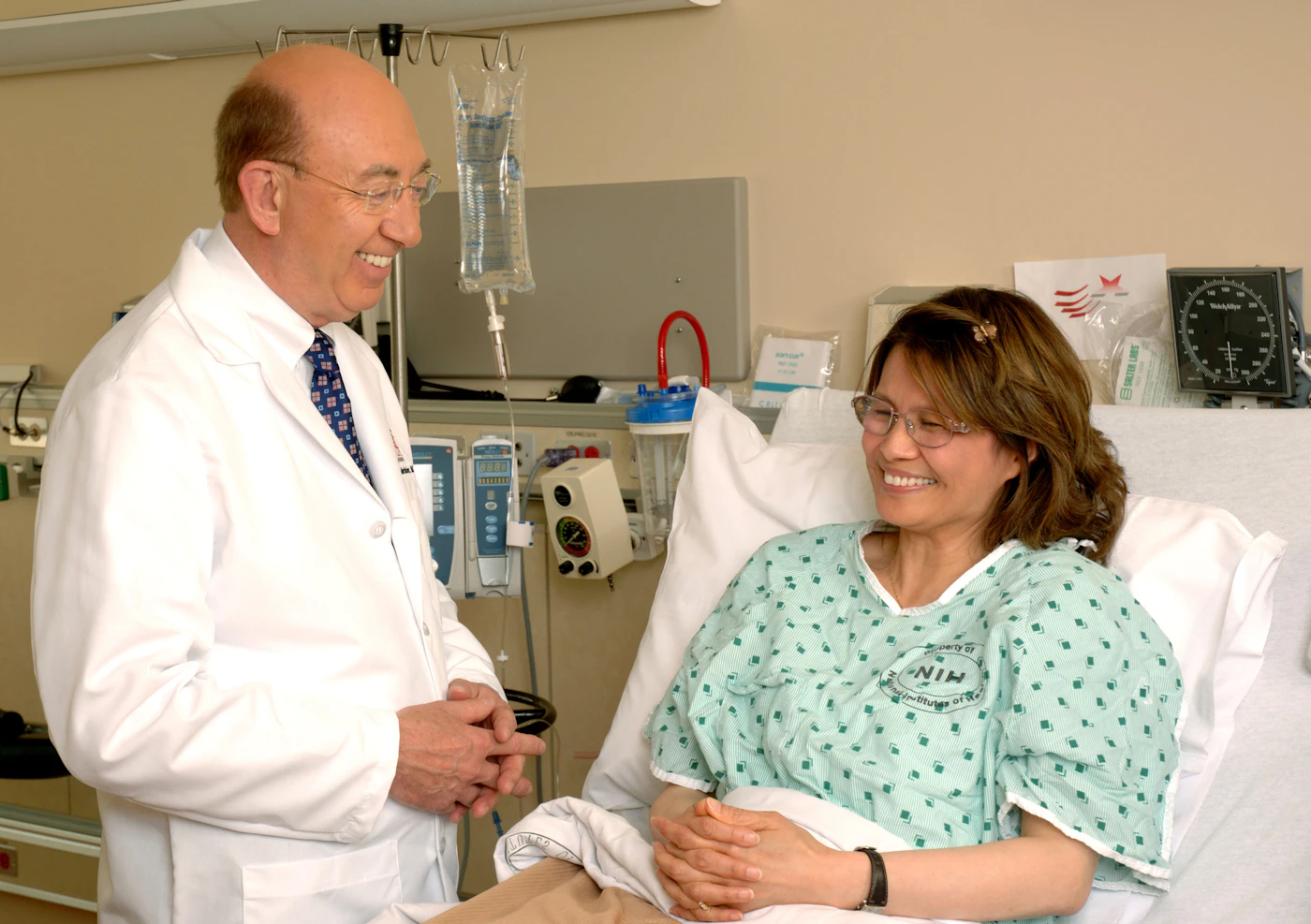

Infectious disease billing covers consults, visits and infusions in the hospital and the office. Hospital work is coded with the codes each payer accepts, visit levels are matched to the decision making documented, antibiotics and injectables are billed by the dose, and hospital charges are matched to the patients your physicians saw.
$30M
in improper Medicare payments to infectious disease in CMS’s 2025 review, a 4.0% improper payment rate
82.0%
of those infectious disease errors were incorrect coding, and the other 18.0% had no documentation
Much of infectious disease work happens as consults in the hospital, and Medicare stopped paying consultation codes years ago while many commercial plans still use them. The same consult can need different codes for different payers, and the level of every hospital visit has to match the decision making in the note. Outpatient antibiotics and long-acting injectables add drug units and administration codes.
The payer and the visit level decide the claim. That is why we check each hospital and office visit against the payer’s code set and the documented decision making before it goes out.
Infectious disease physicians bill in the hospital, the office and the infusion chair, often for the same patient. Each setting has its own codes. Each card shows where the claim fails and what we change.
Pays forInitial and follow-up hospital visits for consults on inpatients and observation patients.
Where it breaks
What we do
Pays forIV antibiotics given in the office or infusion suite, billed with the drug, the dose and the administration.
Where it breaks
What we do
Pays forHIV treatment visits, long-acting injectable regimens, and screening services such as HIV and hepatitis C tests.
Where it breaks
What we do
Medicare stopped paying the consultation codes in 2010. For a Medicare patient, a consult in the hospital is billed as initial hospital care (99221 to 99223) at the level the decision making or time supports, and later visits as subsequent care (99231 to 99233). Each specialist who sees the patient can bill an initial visit for their first encounter. Only the admitting physician adds modifier AI. Outpatient consults are billed as new or established office visits.
Many commercial plans still pay the consultation codes, 99242 to 99245 in the office and 99252 to 99255 in the hospital, so the same consult can need different codes for different payers. Since 2023, observation and inpatient stays share the same hospital visit codes.
What we do: before a consult goes out, we check the payer, choose initial hospital care or a consult code to match, set the level from the note and confirm who the admitting physician is, so the claim is coded the way that payer pays.

Infectious disease claims move between hospital visit codes, drug codes and preventive codes. These are the ones we see most, with what each payer checks on them.
| Code | What it covers | What payers look for |
|---|---|---|
| 99221 to 99223 | Initial hospital or observation care | Medicare consults billed here, at the documented level; AI only for the admitting physician. |
| 99231 to 99233 | Subsequent hospital care | One visit per day per specialty in the group, at the documented level. |
| 99252 to 9925599242 to 99245 | Consultation codes, hospital and office | Commercial plans that pay them; not Medicare. |
| 99202 to 99215 | Office visits (E/M) | The level matches the decision making or time documented; modifier 25 with a same-day procedure only when the visit is separate. |
| 963659636696374 | IV infusion and push administration | Start and stop times for infusions; one initial service per encounter. |
| J0696 | Ceftriaxone, per 250 mg | Units from the dose given: a 1 g dose is 4 units. |
| J3370 | Vancomycin, per 500 mg | Units from the dose, with the infusion time. |
| J0741 | Long-acting cabotegravir and rilpivirine injection | Units from the dose, authorization, and the injection schedule. |
| G0475G0472 | HIV and hepatitis C screening | Medicare screening codes, with the frequency and risk rules. |
Only the admitting physician's initial hospital visit carries it.
A visit significant and separate from a same-day procedure or injection. Modifier 25 explained
Video visits for plans that ask for it.
Required by Medicare on single-dose drugs when the whole dose was given.
The unused part of a single-dose vial, billed on its own line.
A procedure that is normally bundled but was separate on this date. Our modifier 59 guide
Sources: CMS MLN Matters MM6740; Medicare Claims Processing Manual, chapter 12, section 30.6 (evaluation and management); CMS JW and JZ Modifier FAQs; Medicare Claims Processing Manual, chapter 18 (preventive services). CPT is a registered trademark of the American Medical Association; the descriptions above are summaries. Reviewed October 2026.
It is not for every practice. If you are a hospital-employed group whose billing the hospital handles, you do not need us. And if your in-house team keeps denials low and receivables current, keep them, and consider a periodic billing audit instead.
We look at your clean-claim rate, your denials by payer and reason, consult coding by payer, hospital visit levels, drug units and authorizations, and your aging receivables, and tell you what we find, whether or not you go further with us.
We get access to your practice management system and clearinghouse, load each payer's authorization and bundling rules and your fee schedules, list each hospital you round at and open drug authorizations, and agree how escalations work. Most practices are live within one to two weeks.
Hospital visits, office visits and infusions are coded and claims submitted within 24 hours. Rejections are corrected the same day, remittances posted as they arrive, consult codes by payer, visit levels and drug units checked, and denials worked to their cause, all inside your system.
A report you can read in ten minutes: what was billed and collected by payer, site and service line, what was denied and why, authorizations pending, and what is aging.
You do not change systems to work with Summit Billing Solutions. We work in the practice management and EHR systems below, and through the clearinghouse you already use. If your EHR is not shown, ask; the list grows as we onboard practices.


We check whether each payer pays consultation codes, set the visit level from the note and confirm the admitting physician, so hospital work is coded the way each plan pays it.
You know who is working your account, and you hear from them every week. A familiar face, not a ticket queue.
If we are not earning the relationship, you can leave. That keeps us honest.
Summit is a US company based in Salem, New Hampshire, billing for practices nationwide with the state-by-state payer and Medicaid knowledge that takes.
95-98%
First-pass claim rate
24 hrs
Claims submitted within
28
Average days in A/R
Infectious disease revenue depends on many hospital visits, each worth a modest amount, so the cost of a billing service matters. A fee that is a share of collections scales with what your rounds actually bring in.
Summit Billing Solutions charges between 3% and 9% of monthly collections. Your rate depends on how much of your work is in the hospital, infusion volume, your payer mix and the state of the receivables, which we see in the free account review.
3% to 9%
of monthly collections
We bill for more than 40 specialties, for practices in all 50 states, from Salem, New Hampshire. Each one has its own codes, modifiers and payer rules.
A free account review looks at your clean-claim rate, your denials by payer and reason, consult coding by payer, hospital visit levels, drug units and authorizations, and your aging receivables, and tells you what we would change. No cost, no obligation, and no pressure to continue. What the review covers, step by step, is on the free account review page.
50A Northwestern Dr Ste 3, Salem, NH 03079-4827
603-207-3172
(866) 906-3116
info@summitbillingsolutions.com
Mon - Fri @ 9am - 5pm


