
Dermatology billing services for office visits, skin procedures and Mohs surgery

Dermatology billing for practices and groups: office visits with same-day procedures, biopsies and destructions, excisions and Mohs surgery with their repairs, and phototherapy and injections, worked inside the software you already use by a US-based team.

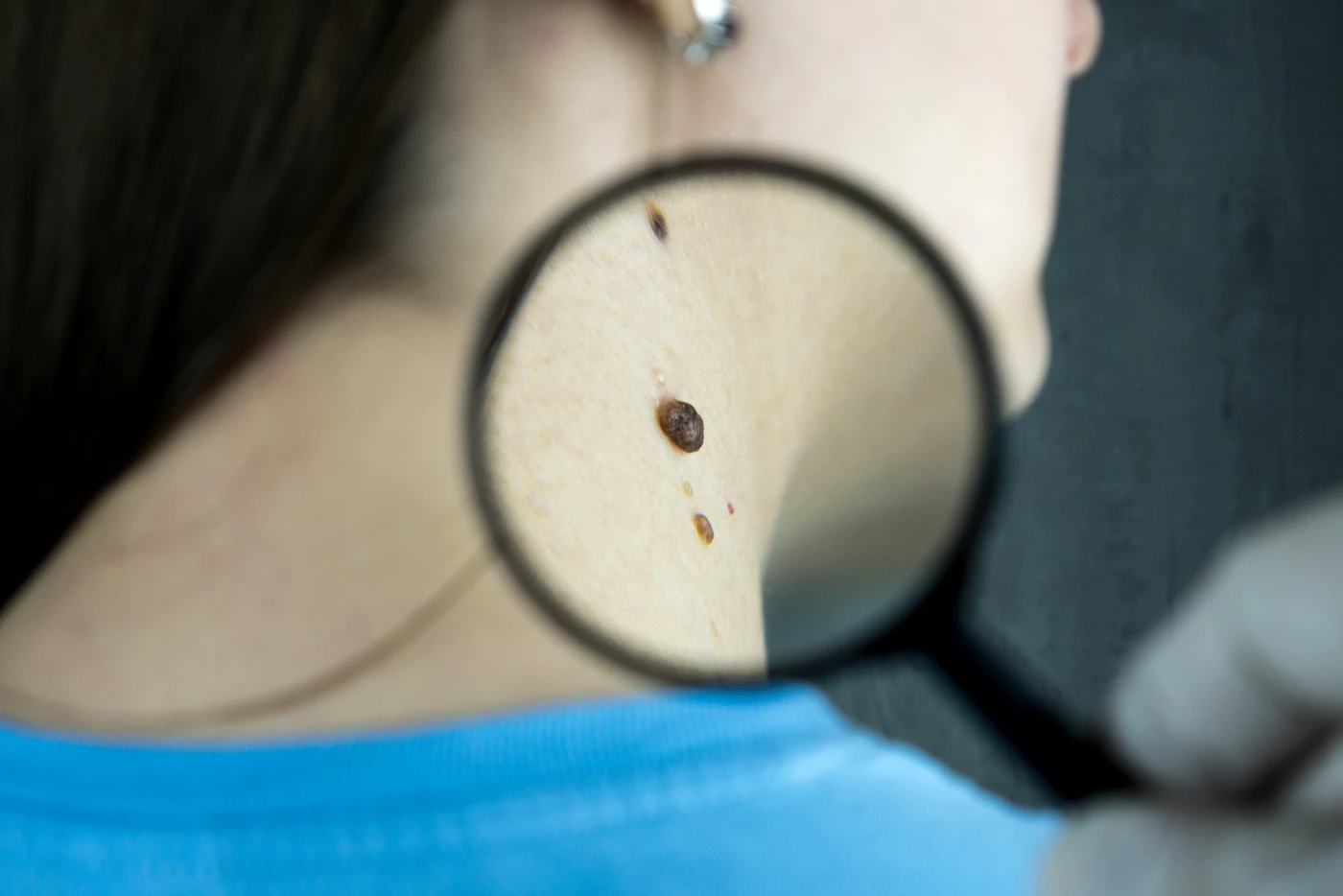
Clinician examining a mole on a patient's neck through a magnifying glass
Google logo
Rated 4.9 on Google★★★★★

What dermatology billing services include

Dermatology billing services turn every visit and procedure into a paid claim. Each lesion is coded by what was done, its size and what the pathology showed, a same-day visit is billed only when it was separate, and every payment, denial and patient balance is followed until it is resolved.

$103M

in improper Medicare payments to dermatology in CMS’s 2025 review, a 3.4% improper payment rate

39.6%

of those dermatology errors were incorrect coding, and another 60.4% were missing or insufficient documentation

Dermatology claims are built lesion by lesion. A biopsy, a destruction and an excision can happen at the same visit on different spots, each with its own code, and an excision cannot be coded until the pathology report says whether the lesion was benign or malignant and the note records its size with margins. Add Mohs surgery billed by stage and tissue block, repairs coded by length and complexity, and a visit that is often on the same day, and one appointment can carry several lines that each need support.

The lesion’s size and pathology decide the claim. That is why we wait for pathology on excisions and check the measurements, sites and modifiers on every dermatology claim before it goes out, not after it is denied or downcoded.

Three kinds of dermatology claims, three sets of rules

Most dermatology practices bill office procedures, skin cancer surgery and cosmetic or uncovered services in the same week, often for the same patient. Each one pays differently and fails in its own way. Here is where each breaks, and what we do about it.

Visits and office procedures

Pays forNew and established visits, plus biopsies, destructions of premalignant lesions, injections and other procedures done at the same appointment.

Where it breaks

What we do

Skin cancer surgery

Pays forExcisions of benign and malignant lesions, Mohs micrographic surgery by stage, and the repairs that close the wound.

Where it breaks

What we do

Cosmetic, coverage and patient balances

Pays forRemoval of benign lesions when it is medically necessary, phototherapy, and the cosmetic services patients pay for themselves.

Where it breaks

What we do

Excisions: size, margins and pathology decide the code

Excision codes are chosen by two facts. The first is the excised diameter: the lesion’s largest clinical diameter plus twice the narrowest margin needed for complete removal, measured before the excision. The second is the pathology: benign lesions are coded from 11400 to 11446 and malignant ones from 11600 to 11646, by body area and size. Because the second fact comes from the lab, an excision should not be billed until the report is back.

Simple closure is included in the excision code. An intermediate or complex repair is billed separately, by the total length of the repair in centimeters within each anatomic group, and the note has to describe the layered or complex closure.

What we do: before an excision claim goes out, we check the measured size, the margins, the site and the pathology result, and code the repair from its documented length and type. If anything is missing, we ask the provider the same day, rather than guess and send a claim that is downcoded or denied.

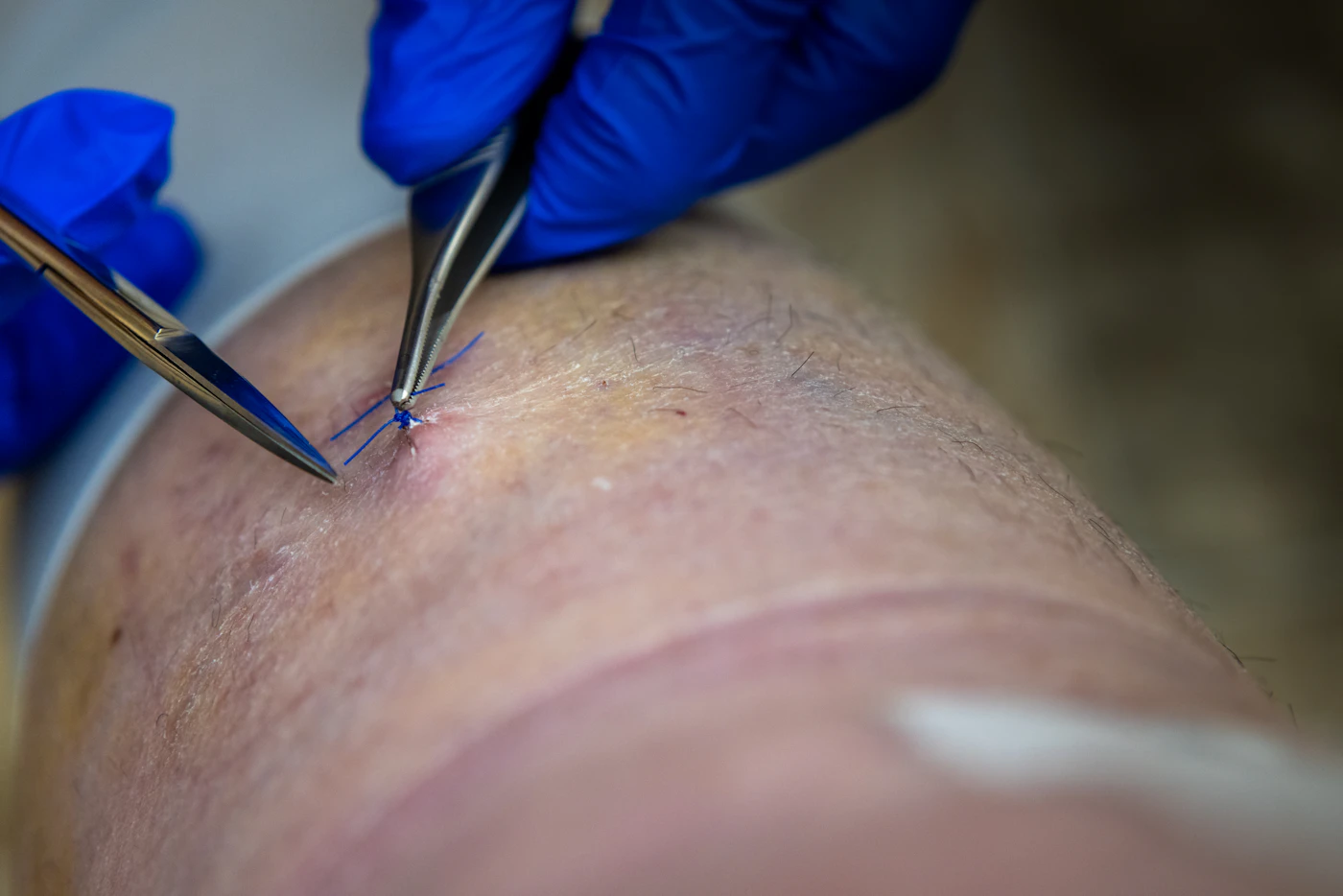
Gloved hands closing a skin incision with sutures
Excision and repair billing checklist

Before you bill

  1. Size: the lesion's largest diameter and the margins, measured before the excision
  2. Site: the body area, which sets the code family
  3. Pathology: the final report: benign or malignant
  4. Closure: simple, intermediate or complex, and the length in centimeters

What goes on the claim

  1. Benign: 11400 to 11446, by site and excised diameter
  2. Malignant: 11600 to 11646, by site and excised diameter
  3. Repair: 12031 to 12057 or 13100 to 13160 when intermediate or complex, by total length
  4. Same-day visit: modifier 25 only when the visit was separate from the decision to excise
Sources: CPT integumentary system guidelines (excision and repair); Medicare NCCI Policy Manual, chapter III (integumentary system); CMS, 2025 Medicare Fee-for-Service Supplemental Improper Payment Data.

The dermatology codes and modifiers we bill every day

These are the codes behind most dermatology claims, and what payers look for on each one. Commercial plans add their own authorization and bundling rules, and we check each one.

Dermatology codes and what payers look for
CodeWhat it coversWhat payers look for
99202 to 99215Office visits (E/M)The level matches the decision making or time documented; modifier 25 with a same-day procedure only when the visit is separate.
11102 to 11107Skin biopsies: tangential, punch and incisionalOne primary code for the most involved method used, and add-on codes for each additional lesion.
170001700317004Destruction of premalignant lesions17000 for the first lesion and 17003 for lesions 2 to 14, or 17004 alone for 15 or more.
1711017111Destruction of benign lesions, such as wartsBy count: up to 14 lesions, or 15 or more.
11400 to 11446Excision of benign lesionsCoded by site and excised diameter, after pathology confirms the lesion was benign.
11600 to 11646Excision of malignant lesionsCoded by site and excised diameter, once pathology confirms malignancy.
17311 to 17315Mohs micrographic surgeryBy site, stage and number of tissue blocks; the surgeon acts as both surgeon and pathologist.
12031 to 1205713100 to 13160Intermediate and complex repairsBilled separately from the excision, by total length in centimeters and anatomic group.
9691096912PhototherapyThe treatment type and the response documented; authorization from many plans.
1190011901Intralesional injectionsBy number of lesions injected, up to seven or more than seven, with the drug billed separately.

Modifiers that decide the claim

25

Separate visit

An office visit that is significant and separate from a same-day biopsy or destruction. Modifier 25 explained

59 / XS

Separate lesion or site

A procedure on a different lesion or site from another procedure at the same visit. Our modifier 59 guide

GA

ABN on file

Medicare: the patient signed an Advance Beneficiary Notice for a service that may not be covered.

GZ

No ABN on file

Medicare: a service expected to be denied, with no signed Advance Beneficiary Notice.

58

Staged procedure

A planned second procedure, such as a staged repair, during the global period.

79

Unrelated procedure, global period

A procedure on a new lesion during the global period of an earlier excision.

Sources: Medicare NCCI Policy Manual, chapter III (integumentary system); Medicare Claims Processing Manual, chapter 12 (physician services and global surgery) and chapter 30 (financial liability protections); Medicare local coverage rules for removal of benign skin lesions. CPT is a registered trademark of the American Medical Association; the descriptions above are summaries. Reviewed October 2026.

Who dermatology billing services are for

It is not for every practice. If you are a hospital-employed group whose billing the hospital handles, you do not need us. And if your in-house team keeps denials low and receivables current, keep them, and consider a periodic billing audit instead.

How we take over your billing

  1. Free account review

    We look at your clean-claim rate, your denials by payer and reason, lesion coding, pathology holds, modifier 25 use, authorizations, and your aging receivables, and tell you what we find, whether or not you go further with us.

  2. Onboarding

    We get access to your practice management system and clearinghouse, load each payer's authorization and bundling rules and your fee schedules, list pending pathology and open authorizations, and agree how escalations work. Most practices are live within one to two weeks.

  3. Daily billing

    Visits and procedures are coded and claims submitted within 24 hours. Rejections are corrected the same day, remittances posted as they arrive, lesion sizes, pathology and modifiers checked, and denials worked to their cause, all inside your system.

  4. Monthly reporting

    A report you can read in ten minutes: what was billed and collected by payer, site and service line, what was denied and why, authorizations pending, and what is aging.

We work with your software

You do not change systems to work with Summit Billing Solutions. We work in the practice management and EHR systems below, and through the clearinghouse you already use. If your EHR is not shown, ask; the list grows as we onboard practices.

athenahealth EHR and revenue cycle management software logo
eClinicalWorks EHR software logo
NextGen Healthcare EHR software logo
Allscripts EHR software logo
HealthFusion MediTouch EHR software logo
CureMD EHR and practice management software logo
AdvancedMD practice management and medical billing software logo
Tebra practice management and medical billing software logo
Availity clearinghouse logo
Office Ally clearinghouse and practice management software logo

Why dermatology practices choose Summit Billing Solutions

Dermatology rules, applied daily

Your claims are worked by billers who handle biopsies, excisions, Mohs stages and repairs every day, not once a quarter.

A named contact and a weekly call

You know who is working your account, and you hear from them every week. A familiar face, not a ticket queue.

Month to month, no long-term lock-in

If we are not earning the relationship, you can leave. That keeps us honest.

A US-based team, serving all 50 states

Your claims are worked in the United States, with the state-by-state payer and Medicaid knowledge that takes.

Results and reviews

2%

Average claim rejection rate

24 hrs

Claims submitted within

28

Average days in A/R

Billing can easily become stressful and overwhelming, but with their team, the entire process feels organized, manageable, and under control.

Matthew Hersey
Matthew Hersey

Not only have they helped us streamline our operations, but their expertise has also maximized our revenue cycle, allowing us to focus more on patient care. The level of communication is outstanding; we always feel informed and supported.

Khadijah Cisse
Khadijah Cisse

Their organization and communication skills are impressive, allowing for effective and efficient collaboration.


Alan Almanzar
Alan Almanzar

Google logo
Rated 4.9 out of 5
Rated 4.9 by our clients on Google

How dermatology billing pricing works

Most billing companies charge a percentage of what they collect; some charge a flat monthly fee or a per-claim rate. For a dermatology practice, a percentage usually fits best: the company is paid when you are paid, so the incentive sits where it belongs.

Summit Billing Solutions charges between 3% and 9% of monthly collections. What moves the number for a dermatology practice is the mix of medical, surgical and cosmetic work, procedure volume, Mohs volume, and how clean the receivables are when we take them on, which is why we quote your exact rate after the free account review, not before.

3% to 9%

of monthly collections

Questions dermatology practices ask before switching

Most billing companies charge a percentage of collections, and a few charge a flat monthly or per-claim fee. Summit Billing Solutions charges between 3% and 9% of monthly collections. For a dermatology practice, the rate depends on the mix of medical, surgical and cosmetic work, procedure volume, Mohs volume and the state of your receivables, and we quote your exact rate after the free account review.

Find out what your dermatology billing is actually costing you

A free account review looks at your clean-claim rate, your denials by payer and reason, lesion coding and pathology holds, modifier 25 and authorizations, and your aging receivables, and tells you what we would change. No cost, no obligation, and no pressure to continue. What the review covers, step by step, is on the free account review page.

50A Northwestern Drive, Salem, NH 03079

603-207-3172

(866) 906-3116

info@summitbillingsolutions.com

Mon - Fri @ 9am - 5pm