


For a small practice, coding usually happens one of two ways: the provider picks the codes in the EHR at the end of the visit, or a biller copies whatever the superbill says. Both work until they do not. Summit Billing Solutions adds the step that catches the problem before the payer does: a coder reads the note, confirms the codes support each other and match the payer’s policy, applies the modifiers the circumstances call for, and sends a query to the provider when something is missing. The claim still goes out within 24 hours; the review sits inside that window, not after it. It is the core of medical billing done properly, and it is where most coding denials are prevented rather than reworked.
The rules are public and they move. The ICD-10 code sets are updated every October 1, with CMS publishing the new files each year (CMS, ICD-10). Medicare’s National Correct Coding Initiative edits exist, in CMS’s words, “to prevent improper payment when incorrect code combinations are reported” (CMS, NCCI), and most commercial payers apply the same logic. A coder’s job is to know those rules on the day they change. Our guide to medical coding explained covers the basics.
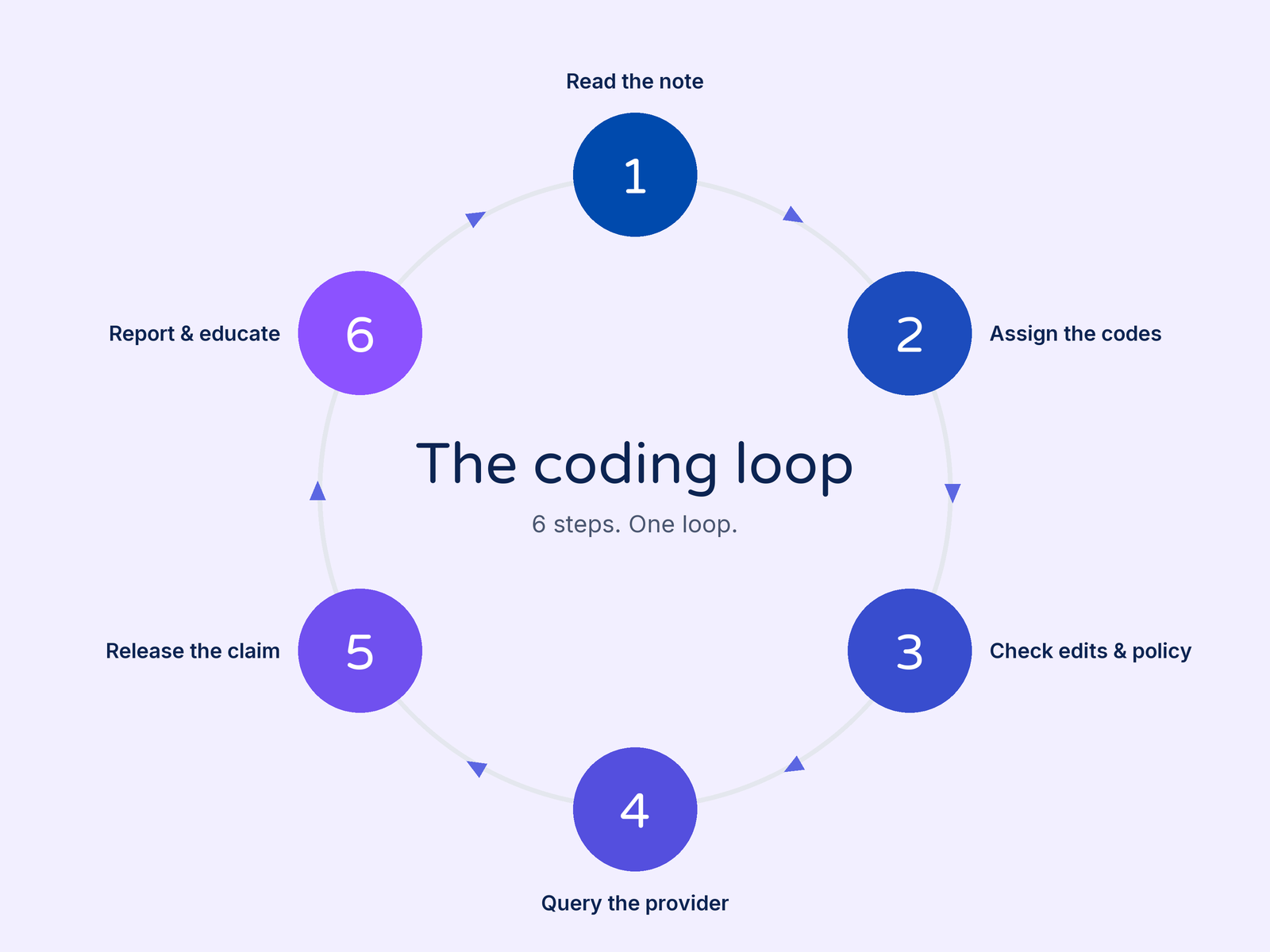
| Number | Code set or decision | What it decides | Where it goes wrong, and what we do | Related |
|---|---|---|---|---|
| 1 | Diagnosis codes (ICD-10-CM) | Why the patient was seen and what was found, to the specificity the code set allows. The diagnosis is what a payer tests the procedure against for medical necessity. | Unspecified codes where the note supports specific ones, or a diagnosis that does not justify the procedure. We code to the documented specificity and pair each procedure with the diagnosis that supports it. | Medical coding explained |
| 2 | Procedure codes (CPT and HCPCS) | What was done: the service, the supply, the drug, the test. CPT is maintained by the AMA; HCPCS Level II covers what CPT does not, and both have their own update cycles. | A deleted code, the wrong code for the setting, or a service performed and never captured. We work from the current code sets, capture every documented service, and flag anything documented but unbilled. | Charge entry |
| 3 | E/M level | How much the visit itself pays. For office visits the level follows medical decision making or total time on the date of service, under the rules CMS publishes for evaluation and management visits. | Every visit coded at the same level regardless of the note, in either direction. We level each visit from the documentation and show you the distribution by provider each month, so a pattern is visible before a payer sees it. | Medical billing audit |
| 4 | Modifiers | The circumstances that change payment: a separate E/M on the day of a procedure (25), a distinct procedure (59), an unrelated visit in a global period (24), laterality, and the rest. | A missing modifier is a denial; an unsupported one is an audit finding. We apply modifiers only where the note supports them; our guides to modifiers 24 vs 25 and modifier 59 show the reasoning. | Modifiers 24 vs 25 guide |
| 5 | Bundling and NCCI edits | Which codes may be billed together and in what units. Medicare's NCCI procedure-to-procedure edits and medically unlikely edits define the pairs and the unit limits, and commercial payers apply similar logic. | Two codes that bundle are billed separately and denied, or a bundled service is never billed at all. We run every claim against the current edits before it leaves and use a modifier only where the edit allows one and the note supports it. | Denial management |
| 6 | Place of service and incident-to | Where the service happened and who furnished it. Place of service changes the rate; incident-to billing lets certain services by auxiliary staff be billed under the physician when Medicare's conditions are met. | The wrong place-of-service code, or an incident-to claim without direct supervision or an established plan of care. We code the setting from the record and bill incident-to only when the manual's conditions are documented. | POS 22 guide |
| Compare | Provider codes the visit | Summit Billing Solutions |
|---|---|---|
| Who codes | The provider, in the EHR, at the end of a full day. | A coder who reads the note the next morning, working inside your system. |
| Checks before submission | Whatever the EHR's scrubber catches, if it is switched on. | Diagnosis-to-procedure support, NCCI edits, payer policy, modifiers and units, every claim. |
| When the note falls short | The claim goes out anyway, or a lower code is picked to be safe. | A short query to the provider, answered inside the 24-hour submission window. |
| Code set changes | Noticed when a deleted code starts denying. | Applied on the day they take effect, every October 1 and every payer update in between. |
| Feedback | None, until an audit letter. | E/M distribution, query rate and coding denials by provider in the monthly report. |
| Audit exposure | Unknown until a payer asks for records. | Reduced every day, because nothing is billed the note does not support. |
We pull your denials for the last 90 days and your E/M distribution by provider, show you which denials were coding, bundling or modifier problems, and where the documentation and the codes disagree, whether or not you go further with us.
We load your specialty's code sets and your payers' policies, agree the query workflow with each provider, and connect to your EHR and practice management system so coding happens inside them. Most practices are live within one to two weeks.
Each encounter is coded or reviewed from the note, checked against the edits and the payer's policy, and released within 24 hours. Queries go to the provider the same day; documented but unbilled services are flagged before the claim closes.
E/M level distribution by provider, query volume and response time, coding denials by payer and reason, and the documentation patterns worth a conversation, reviewed with your named contact on the weekly call.


Your claims are worked by a team in the United States, not routed offshore.
You know who is working your account, and you hear from them every week. A familiar face, not a ticket queue.
If we are not earning the relationship, you can leave. That keeps us honest.
We are in Salem, NH, and we bill for practices nationwide, with the state-by-state payer knowledge that takes.
2%
Average claim rejection rate
24 hrs
Claims submitted within
28
Average days in A/R

I’ve been in billing for 30+ years and Summit is the best I’ve worked with. They’re knowledgeable, detailed, and persistent to get claims paid instead of writing them off. They take the burden off providers so we can focus on patients.

We billed in-house for decades, but it was time for a change. I couldn’t be happier with Summit. The transition was seamless thanks to their strong systems and clear communication. If you’re considering a switch, talk to Summit.


When Summit Billing Solutions handles your billing, coding and coding review are part of the service, inside the fee of 3% to 9% of monthly collections. A claim that is coded correctly the first time is the cheapest claim to collect, so the review is never an add-on.
A practice that keeps its billing in house can have coding or coding review alone. That is quoted after the free account review, based on encounter volume, specialty and whether you want coding from the note or a review of the codes your providers choose. We do not quote an accuracy percentage, because coding accuracy depends on documentation as much as on the coder; we quote the work. How billing companies structure their fees more generally is covered in our guide to medical billing pricing.
50A Northwestern Drive, Salem, NH 03079
603-207-3172
(866) 906-3116
info@summitbillingsolutions.com
Mon - Fri @ 9am - 5pm
Summit Billing Solutions has been one of the best decisions for my business. They’re responsive, transparent, and make billing feel organized and manageable. They truly feel like a partner, not a vendor. Highly recommend.