Urology practices do not bill like general primary care offices. They handle a procedure-heavy mix, recurring follow-up care, diagnostic testing, surgical episodes, imaging-related coordination, global periods, frequent payer edits, and documentation rules that can quickly turn small mistakes into delayed cash flow. That is exactly why urology medical billing needs a specialty-driven process, not a generic billing workflow built for every practice type.
If your practice is struggling with claim denials, aging AR, undercoded procedures, or staff who spend too much time chasing payer issues instead of supporting patients, the problem is usually not just volume. It is specialization. Urology has too many coding, modifier, medical necessity, and payer-specific nuances for a one-size-fits-all approach to work consistently.
The good news is that a strong urology medical billing partner can make an immediate difference. When billing is built around your procedure mix, your payer contracts, your diagnosis trends, and your documentation habits, claims go out cleaner, denials become easier to prevent, and reimbursements move faster. That matters even more in the current environment, where the AMA says the CPT 2026 code set includes 418 total changes, with new Category I codes effective January 1, 2026, and CMS continues updating physician payment policies that affect how practices plan collections and reporting.
For a urology practice, the real goal is not simply to outsource billing. The goal is to protect revenue at every step, from patient intake and authorization checks to clean claim submission, denial defense, appeals, payment posting, and payer follow-up. That is where specialty billing becomes a growth strategy, not just an administrative service.
Why urology medical billing is more complex than many practices expect
On the surface, billing may look like a back-office task. In reality, it is a revenue system that touches almost every part of a urology practice.
Urology is one of those specialties where reimbursement accuracy can swing significantly based on small details. A missed modifier, an incomplete operative note, an unsupported diagnosis link, an incorrect unit count, or failure to distinguish separate procedures from bundled services can all lead to lost revenue. CMS specifically notes that modifier 59 is often used incorrectly and should only be used when documentation supports a separate and distinct service. CMS also reminds providers that modifier 25 is for a significant, separately identifiable E/M service on the same day as another procedure or service.
For urology, that matters because many encounters blend office evaluation, diagnostics, and procedures. If the billing team does not understand when a service is separately reportable and when it is already included, the practice can end up with denials, compliance risk, or both.
CMS also uses Medically Unlikely Edits, or MUEs, to flag units of service that exceed what would be expected on the vast majority of properly reported claims. That makes specialty review even more important for high-frequency procedural environments.
Then there is the local payer layer. Medicare coverage and billing guidance can vary by Medicare Administrative Contractor, and CMS explicitly points practices to search state-specific Medicare coverage articles and contact the local MAC when coverage questions arise. In other words, even if your coding is conceptually right, reimbursement can still depend on jurisdictional coverage rules and documentation requirements.
That is why generic billing support often fails urology practices. A generalist may know how to submit claims. A true urology billing team knows how to defend revenue before the claim is ever sent.
The most common revenue leaks in urology billing
When urology practices say billing is “fine,” there are often hidden problems underneath the surface. The claims may be going out, but the revenue cycle may still be leaking money in six common areas.
1. Documentation that does not fully support the billed service
A procedure note may be clinically useful but still incomplete from a reimbursement perspective. Payers want specificity. They want medical necessity to be obvious. They want procedure details, laterality when relevant, post-void findings when required, and clear linkage between diagnosis and treatment.
For example, CMS guidance for post-void residual urine measurement says the medical record should include the test result, documentation that it was done immediately post-void, the date of the test, and who performed it.
That kind of detail is where specialty billing earns its value. It helps providers document once, correctly, instead of correcting denials later.
2. Modifier misuse
In urology, modifier decisions can make or break reimbursement. Some services are bundled by rule unless very specific circumstances apply. CMS makes clear that documentation must support any NCCI-associated modifier used, and that modifier 59 should not be used simply because two procedures are different.
A specialty billing team knows when a modifier is justified, when it is risky, and when the documentation still needs work before a claim should go out.
3. Bundling and separate procedure mistakes
CMS policy materials for genitourinary codes show how often cystoscopy and ureteroscopy-related services can run into bundling rules. Some services designated as “separate procedure” are not separately payable when performed with related procedures in the same encounter.
This is one of the biggest reasons urology billing cannot be treated like a commodity service.
4. Units and utilization errors
MUE edits exist specifically to reduce improper payments, and claims can be denied when units exceed what CMS expects for appropriate reporting.
In a specialty with diagnostic studies, catheter-related services, and procedure-based encounters, unit logic needs close review.
5. Weak denial follow-up
Many practices rework denials too slowly, too inconsistently, or too late. Some are corrected and resubmitted. Others need a structured appeal. Others reveal a front-end process issue that should never happen again. Without denial categorization and root-cause tracking, the same denials repeat month after month.
6. Billing teams that do not understand urology workflows
A good urology billing process starts before the claim exists. It starts with eligibility checks, authorization workflows, diagnosis capture, documentation templates, charge entry review, and payer rules that reflect the realities of the specialty.
When the billing team works like an extension of the practice, revenue improves. When it works like a disconnected vendor, problems multiply.
In-house billing vs specialized urology billing support
| Area | In-house general billing team | Specialized urology medical billing partner |
|---|---|---|
| Coding familiarity | Often broad but not specialty-deep | Focused on urology workflows, common edits, and payer patterns |
| Denial prevention | Reactive | Preventive and trend-based |
| Modifier accuracy | Depends on staff experience | Stronger review around specialty-specific scenarios |
| Appeals process | Often inconsistent | Structured and tracked |
| Reporting | Basic collections view | Deeper AR, denial, payer, and procedure insights |
| Scalability | Hard to expand without hiring | Easier to scale with growth and provider volume |
| Staff burden | High administrative load on front desk and clinical team | Lower burden through specialized process support |
This does not mean every in-house team performs poorly. Some do an excellent job. But many urology practices hit a ceiling. Once procedure volume rises, payer complexity grows, or staffing turns over, reimbursement starts depending too heavily on individual memory instead of a durable process.
A specialized partner creates repeatability. That is what allows collections to improve consistently, not just temporarily.
What a high-performing urology medical billing service should actually do
A lot of billing companies say they work with specialists. That alone is not enough. If a urology practice is choosing a billing partner, it should look for operational depth, not just broad claims submission capability.
A real urology billing service should handle:
Front-end revenue protection
This includes insurance verification, authorization checks where required, referral tracking, patient responsibility clarity, and clean demographic capture. If the front end is weak, the back end will always struggle.
Accurate charge capture and coding review
The team should understand office visits, cystoscopy-related services, urodynamics, stone procedures, catheter and supply-related services, vasectomy workflows, post-op billing boundaries, and payer-specific claim formatting issues.
Modifier review and NCCI awareness
CMS makes it clear that correct modifier use depends on documentation and circumstance, not habit. A strong partner should know when to flag claims before submission and when to request documentation clarification.
Denial management with root-cause analysis
A denial team should not just “work denials.” It should classify them. Was it eligibility? Authorization? Coding? Medical necessity? Bundling? Timely filing? Documentation? Units? That analysis is what reduces repeat denials over time.
Appeals support
For Medicare fee-for-service, the first level appeal is redetermination, and the second level is reconsideration. CMS states providers generally have 120 days from the initial claim determination to request redetermination, and 180 days from the redetermination decision to request reconsideration.
A capable billing partner should know the clock, the paperwork, and the evidence needed to support the appeal.
Reporting that helps practice leadership make decisions
Collections alone do not tell the full story. Urology practices should be able to review denial rates, net collection rate, gross collection rate, days in AR, AR over 90 days, payer turnaround by carrier, procedure category performance, authorization-related losses, and provider-level trends.
Workflow feedback to the practice
The best billing partners do not just send reports. They help the practice improve scheduling, intake, charting, and follow-up habits so fewer claims fail in the first place.
If your urology practice is dealing with recurring denials, slow payments, or AR that feels stuck, Summit Billing Solutions can help you tighten the revenue cycle without overloading your staff.
How outsourced urology medical billing improves cash flow
The biggest benefit of outsourced billing is not simply “saving time.” It is creating a more reliable path from encounter to payment.
Here is how that usually happens.
Cleaner claims from day one
When charges are reviewed by people who know the specialty, fewer claims go out with obvious defects. That means fewer first-pass rejections, fewer payer requests for clarification, and less rework.
Faster response to payer issues
A specialized team spots patterns faster. If one payer starts denying a recurring procedure, the issue is identified earlier. If a specific location has documentation gaps, leadership hears about it before the problem expands.
Better defense of high-value claims
Not all denials are equal. A $35 clerical denial and a multi-thousand-dollar procedural denial should not receive the same level of urgency. A specialty-focused billing partner prioritizes according to financial impact and appeal potential.
Better staff leverage
Many practices think they need more front-desk people or more billers. Often they actually need better systems. Outsourcing can reduce internal firefighting so staff can focus on patient service, scheduling, collections at point of service, and chart completion.
Improved visibility for growth decisions
When billing data is clean, practice owners can make better decisions about payer mix, service lines, scheduling templates, staffing, and expansion. Billing becomes a source of intelligence, not just a back-office necessity.
Best practices for managing urology claim denials
Denials should never be treated as random. They are signals. They reveal where revenue is breaking.
A strong urology denial strategy usually includes five layers.
1. Categorize every denial the same way
Use standard buckets such as eligibility, authorization, coding, modifier, medical necessity, documentation, bundling, timely filing, duplicate claim, and patient information error.
If denial categories are inconsistent, your reporting will be useless.
2. Fix the source, not just the claim
If the same denial happens ten times, the issue is not ten claims. The issue is one broken process.
Maybe the front desk is not verifying one secondary payer correctly. Maybe providers are not documenting why a service was distinct. Maybe charge entry is overusing a modifier. Maybe one procedure template does not capture the right detail.
3. Understand Medicare edit logic
CMS guidance around NCCI edits, modifier use, and MUEs is essential because many commercial payers build their edits around similar logic. CMS also provides official resources for practices to review modifier rules and MUE limitations.
Even when a commercial payer makes the denial, the correction path often starts with understanding the underlying coding rule.
4. Appeal with evidence, not emotion
When a claim deserves payment, the appeal should clearly explain the reason, the supporting documentation, the medical necessity, and the billing rationale. Medicare providers have a structured appeals framework, and missing deadlines weakens recovery opportunities.
5. Track recovery rate by denial type
Some denial categories are highly recoverable. Others are signs of preventable waste. When a practice knows its appeal win rate and net dollars recovered by category, it can prioritize effort where it matters most.
How to choose a urology-specific medical billing provider
If you are evaluating a billing company, do not start with price. Start with fit.
A lower-cost vendor that misses specialty reimbursement opportunities can become the most expensive option in the room.
Here is what to ask.
Do they already understand urology?
You want evidence that the team understands procedure-heavy specialties, modifier logic, surgical global periods, recurring diagnostics, and urology payer trends. Ask for examples of how they handle denials tied to separate procedures, medical necessity, post-void studies, or cystoscopy-related coding.
How do they prevent denials before claim submission?
Ask whether they review documentation, use claim edits, maintain payer rule libraries, and flag recurring coding issues. Prevention matters more than rework.
What reporting do they provide?
A good partner should show more than collections. Ask to see sample dashboards or reports for denial categories, days in AR, payer performance, and monthly trend analysis.
How do they handle appeals?
Ask who writes them, who tracks deadlines, how often status is reviewed, and how success rates are measured.
How do they communicate with the practice?
You want a team that escalates issues quickly, not one that disappears until month-end. Billing should be collaborative.
How do they support software and integrations?
You do not necessarily need the “best” urology software on paper. You need software and billing workflows that work together. Look for strong eligibility tools, claim scrubbing, denial management, reporting, payment posting efficiency, ERA integration, task tracking, and easy communication between practice staff and billers.
Do they improve the process over time?
The right partner should make your revenue cycle more stable six months from now than it is today. That means trend analysis, staff education, cleaner intake habits, and better documentation support.
For many practices, this is where a specialized company like Summit Billing Solutions stands out. The value is not simply that the work gets done. The value is that the work gets smarter month after month.
Why this matters even more in 2026
Medical billing never stands still. Coding evolves, payment policy changes, payer edits shift, and specialty practices are expected to keep up while still delivering patient care.
The AMA states that the CPT 2026 code set contains 418 total changes, including 288 new codes, 84 deletions, and 46 revisions, with new Category I CPT codes effective January 1, 2026. CMS also continues to revise physician payment rules annually, including conversion factor updates and valuation changes that affect reimbursement planning. Urology leaders are also closely tracking specialty-specific implications through AUA coding and reimbursement resources.
That does not mean every urology practice needs to become a coding think tank. It means every urology practice needs a billing process that can keep up with change.
That is the real business case for outsourcing. Not just lower workload. Better adaptability, better reimbursement protection, and better financial visibility.
Summit Billing Solutions helps practices build a cleaner, more accountable revenue cycle so providers can focus on care while the billing process supports healthier cash flow.
FAQ
What CPT codes are changed in 2026 for urology?
The full answer requires reviewing licensed CPT 2026 resources and payer guidance, because official code changes should always be validated against the current CPT code set, CMS fee schedule updates, and local payer rules before billing. Broadly, the AMA says CPT 2026 includes 418 total changes effective January 1, 2026. In AMA materials tied to 2026 development, one urology-related example was approval to delete CPT 52647 for CPT 2026. Practices should treat that as a signal to do a full specialty code review, not as a complete list of urology changes.
Does a urologist deal with adrenal glands?
Yes, in certain cases. The Urology Care Foundation includes adrenal conditions such as adrenal mass, adrenal gland cancers, pheochromocytoma, Cushing’s syndrome, and Conn’s syndrome within urology educational resources. It also notes that adrenal tumors may be removed by a surgeon with adrenal expertise such as a urologist.
What are 5 common CPT codes in urology?
Five commonly encountered examples in urology billing include CPT 52000 for cystourethroscopy, CPT 52351 for cystourethroscopy with ureteroscopy, CPT 51741 for electro-uroflowmetry, CPT 51798 for post-void residual urine or bladder capacity measurement by ultrasound, and CPT 55250 for vasectomy. Exact coding still depends on documentation, payer policy, and whether services are bundled, separately reportable, or subject to utilization limits.
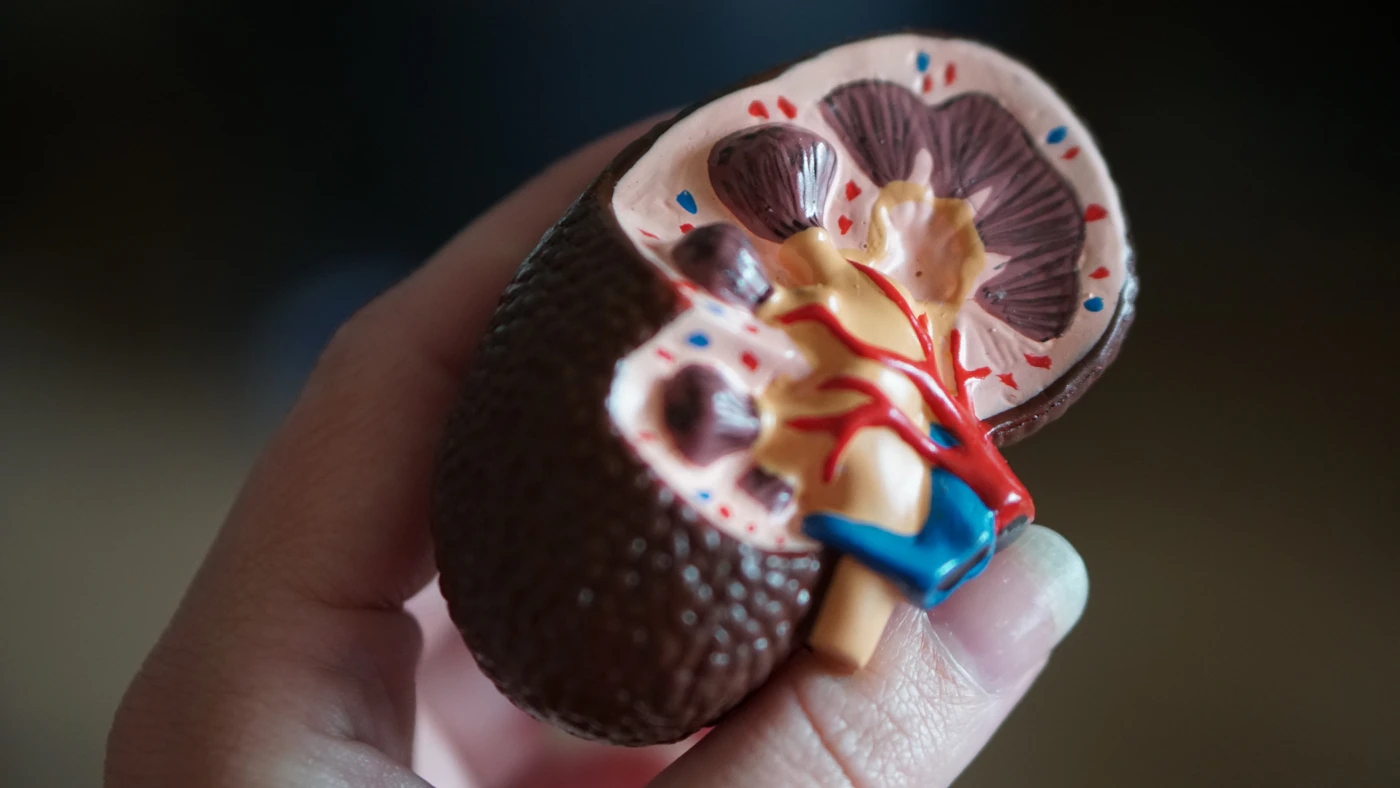
Can a urologist treat a kidney?
Yes. Urology covers the urinary system, including the kidneys. The Urology Care Foundation notes that a urologist is a specialist surgeon who treats problems involving the kidneys, bladder, prostate, and male reproductive organs. Its kidney resources also state that patients with kidney problems or kidney masses may be referred to a urologist, and urologists routinely treat kidney stones and kidney cancer.
How do I appeal a denied urology claim effectively?
Start by identifying the denial type first: coding, documentation, medical necessity, authorization, or eligibility. Then match the appeal to the actual issue with supporting chart notes, procedure details, diagnosis rationale, and payer-specific requirements. If Medicare is involved, pay close attention to filing windows. CMS says the first level appeal, redetermination, generally must be filed within 120 days of the initial determination, and the second level, reconsideration, within 180 days of the redetermination decision.
What should I look for in a urology medical billing company?
Look for specialty familiarity, denial prevention systems, payer follow-up discipline, reporting depth, appeals support, EHR and PM integration experience, and a clear process for improving documentation and front-end workflows. A good vendor should help you reduce avoidable denials over time, not just submit claims faster.
References
- AMA releases CPT 2026 code set.
- Calendar Year 2026 Medicare Physician Fee Schedule Proposed Rule Fact Sheet, CMS.
- Medicare NCCI Medically Unlikely Edits, CMS.
- Medicare NCCI FAQ Library, CMS.
- Medicare Coverage Database guidance on checking state-specific CPT coverage, CMS.
- Medicare Parts A and B appeals process resources, CMS.
- Billing and Coding: Post-Void Residual Urine and/or Bladder Capacity by Ultrasound, CMS.
- Urology Care Foundation resources on adrenal conditions and kidney conditions.